The Prime Day Counter-Calendar: A Shoppers' Guide to Canada's Best Local Sales, By Region
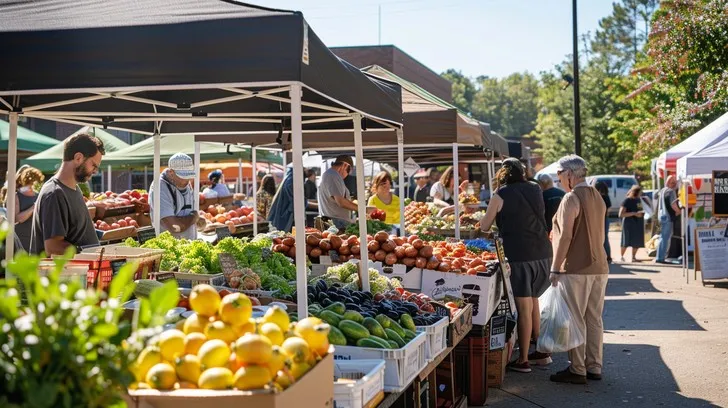
Photo: busy outdoor farmers market stall Canadian city summer, via images.stockcake.com
Every summer and again in autumn, a single corporation attempts to colonize the Canadian shopping calendar. Sale events arrive with the subtlety of a fire alarm, blanketing our screens with countdown timers and manufactured urgency. But here is what the countdown clocks never mention: in the very same weeks, from St. John's to Victoria, local merchants, makers, and farmers are hosting sales and markets of their own — events that keep money in our communities rather than routing it through a Seattle distribution pipeline.
Consider this your counter-calendar. Bookmark it, share it with your neighbourhood association, and revisit it each season.
Atlantic Canada: Markets With Salt Air and Staying Power
The Maritimes have never needed a multinational to teach them how to shop local. In Halifax, the year-round Halifax Forum Farmers' Market and its Seaport counterpart anchor a thriving weekend economy, while the city's independent retailers on Spring Garden Road and in the North End frequently coordinate sidewalk sales through the warmer months. Fredericton's Boyce Farmers Market remains one of the most significant community markets in the country, and Saint John's uptown corridor hosts seasonal pop-ups that reward the curious.
In Newfoundland and Labrador, St. John's downtown merchants lean hard into the holiday season with late-night shopping events along Water Street, while craft fairs connected to the Crafts Council of Newfoundland and Labrador offer work you will never find in a warehouse bin.
Quebec and Ontario: Where the Alternative Calendar Runs Deepest
Montreal's independence from big-box retail culture is legendary, and rightly so. The city's public markets — Jean-Talon, Atwater, Maisonneuve — operate as genuine civic institutions, and the annual sale seasons in neighbourhoods like the Plateau and Mile End see independent boutiques banding together with extended hours and street festivals. Quebec City's Quartier Petit Champlain demonstrates how a historic commercial district can thrive entirely on independent ownership.
Toronto's answer to the sale-event machine includes the One of a Kind Show, one of the largest curated craft gatherings in North America, alongside the Distillery District's winter village and the year-round St. Lawrence Market. Ottawa's Parkdale and ByWard markets, plus the city's independent bookstore scene, offer a full weekend of commerce without a single barcode scanner from headquarters.
The Prairies: Community Commerce in Cold Weather
Winnipeg's Forks Market and the city's robust network of craft fairs — including holiday markets at the RBC Convention Centre — keep Manitoba dollars close to home. Regina and Saskatoon both support farmers' markets and co-op retail traditions that predate e-commerce by generations, a reminder that prairie communities built mutual-aid economics out of necessity.
Edmonton's Old Strathcona district and Calgary's Inglewood and Kensington neighbourhoods host shop-local initiatives during the same weeks the big-box promotions peak, while Alberta's craft beer, textile, and ceramics makers sell directly through seasonal markets across both cities.
British Columbia: Coast to Mountains, Independent by Instinct
Vancouver's Main Street, Commercial Drive, and Granville Island form a triangle of independent retail that no algorithm has managed to replicate. The island takes it further: Victoria's downtown core, Nanaimo's old city quarter, and the Gulf Islands' artisan studios offer an entire geography of alternatives. The Circle Craft Market in Vancouver each November remains one of Western Canada's most significant showcases of handmade goods.
The Territories: Distance Makes the Case Stronger
In Yellowknife, Whitehorse, and Iqaluit, the argument for local commerce is not sentimental — it is structural. Northern communities understand that every dollar spent with a local merchant is a dollar that circulates where it is needed most. Seasonal markets and craft fairs featuring Northern artists, carvers, and textile workers represent the purest expression of what our counter-calendar is about.
How to Use This Calendar
Three practical suggestions. First, mark the dates now: most of these events recur annually, and a reminder set in advance beats a rushed scramble. Second, treat a local sale as a destination, not an errand — bring the family, eat at an independent restaurant, and let the day compound economically. Third, tell the merchants you came because of their independence. In our experience, nothing encourages a small business to keep resisting consolidation like knowing customers noticed.
The countdown clocks want you to believe there is one weekend that matters for your wallet. There are, in fact, fifty-two of them, and they belong to our streets, not our servers.