Delivered at What Price? The Human and Environmental Toll Behind Amazon's Canadian Warehouses
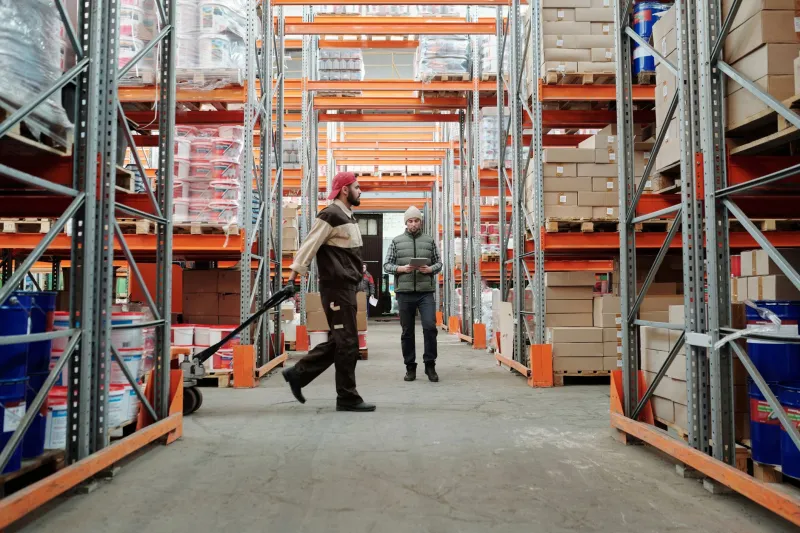
There is a particular satisfaction in watching a package arrive at your door the morning after you ordered it. It feels seamless, almost magical. But the machinery behind that moment — the sprawling fulfilment centres, the fleets of delivery vans, the human bodies moving at algorithmic pace — tells a very different story. Across Canada, Amazon's logistics network has grown into one of the country's most consequential labour and environmental forces, and the communities hosting it are beginning to count the real costs.
A Network Built on Speed — and on People
Amazon currently operates fulfilment and distribution centres in British Columbia, Alberta, Ontario, and Québec, with smaller delivery stations extending its reach into mid-sized cities and suburban corridors. Collectively, these facilities employ tens of thousands of Canadians. On paper, Amazon frequently touts its wages as competitive — and in some regions, its starting hourly rate does exceed the provincial minimum. But labour advocates argue that headline wages obscure a far more complicated picture.
"The pay looks reasonable until you understand what workers are being asked to do for it," says one organiser with a Toronto-based warehouse workers' advocacy group who asked not to be named due to ongoing campaigns. "The productivity quotas, the monitoring, the physical strain — it's a compensation model that trades your body for a marginally better paycheque."
Former Amazon associates across the country have described a workplace culture defined by what the company calls "rate" — the number of items picked, packed, or sorted per hour. Targets are not static; they adjust upward as workers improve, creating a treadmill effect that leaves little room for rest, recovery, or even basic washroom breaks without risking disciplinary flags from automated tracking systems.
One former fulfilment centre employee who worked at an Amazon facility in the Greater Toronto Area recounted the experience plainly: "You are not treated as a person. You are treated as a unit of output. The system knows exactly where you are and what you are doing every second of your shift. If you fall behind, you get a notice. Enough notices, and you're gone — often without a human manager ever speaking to you directly."
Injury Rates and the Silence Around Them
Worker safety data presents one of the starkest indictments of Amazon's Canadian operations. Investigations in the United States, including reporting by outlets such as The Atlantic and data compiled by the Strategic Organizing Center, have consistently shown that Amazon warehouses record injury rates significantly higher than industry averages. While Canada does not maintain a single, publicly accessible national database that isolates Amazon's injury statistics, provincial workers' compensation boards in Ontario and British Columbia have received claims from Amazon employees at rates that labour researchers describe as disproportionate.
Musculoskeletal injuries — strains, sprains, repetitive stress damage — are the most common. They are also the most insidious, because they accumulate gradually and often leave workers unable to continue in physically demanding roles long before they reach retirement age. For many Amazon workers, the company's warehouse is not a career; it is a body-depleting contract that ends when the injuries make continuation impossible.
Amazon has consistently disputed characterisations of its safety record, pointing to investments in ergonomic equipment and safety programmes. Critics counter that these investments are insufficient to offset the fundamental problem: a business model that requires human beings to move at a pace the human body was not designed to sustain.
The Wage Illusion and What It Costs Local Employers
Consider the independent bookshop in Halifax, the family-run hardware store in Saskatoon, or the neighbourhood pharmacy in Montréal. These businesses operate on margins that make Amazon's wage structure not merely difficult to match, but structurally impossible to replicate.
Local retailers in Canada typically cannot offer the same starting wages as Amazon — not because their owners are indifferent to worker wellbeing, but because they do not benefit from the same investor subsidies, tax optimisation strategies, and economies of scale that allow Amazon to absorb labour costs at scale. When Amazon enters a local labour market and sets a wage floor, it does so with resources that no independent business can access.
The result is a gradual hollowing out of the local retail ecosystem. Small employers either lose workers to Amazon's warehouses or are pressured to raise wages they cannot sustain. Either outcome accelerates the consolidation of retail spending on platforms that extract value from communities rather than reinvesting in them.
"Amazon doesn't compete on a level playing field," notes a retail industry analyst based in Vancouver. "It competes on a field it has tilted through sheer capital accumulation. And Canadian communities — especially smaller ones — are paying the price in closed storefronts and diminished main streets."
The Environmental Arithmetic of Same-Day Delivery
The environmental cost of Amazon's Canadian operations is rarely tallied in full. The company has made high-profile commitments to net-zero emissions and has invested in electric delivery vehicles. But the underlying logic of same-day and next-day delivery — the expectation it creates, the infrastructure it demands — runs directly counter to sustainable consumption patterns.
Each expedited delivery requires a vehicle on the road, often carrying a single package to a single address. The consolidation efficiencies that make freight transport relatively carbon-efficient disappear when the final kilometre is rushed rather than planned. Packaging waste compounds the problem: Amazon's fulfilment model generates enormous volumes of cardboard, plastic air pillows, and composite materials, much of which ends up in Canadian municipal waste streams.
Urban distribution centres, increasingly built in peri-urban and suburban areas to enable faster delivery windows, also contribute to local air quality degradation, traffic congestion, and the displacement of lower-income communities from areas rezoned for logistics use. In cities like Mississauga and Surrey, residents near Amazon facilities have raised concerns about truck traffic, noise, and the transformation of former industrial or mixed-use land into single-purpose logistics zones.
What Resistance Looks Like
The response from Canadian workers and communities has not been passive. Unionisation efforts, while difficult under Amazon's well-documented anti-union posture, have gained ground. In 2023, workers at an Amazon facility in Laval, Québec, voted to join the Syndicat des travailleuses et travailleurs d'entrepôts Amazon (STEA), becoming part of a growing — if still fragile — movement to assert collective rights within the company's Canadian operations.
Consumer awareness is another front. Choosing to purchase from local retailers, credit unions, and Canadian-owned online platforms rather than defaulting to Amazon is not merely a lifestyle preference. It is a material act of economic solidarity. Every dollar redirected to a neighbourhood business is a dollar that circulates locally, supports living wages on terms set by community members rather than shareholders in Seattle, and reduces the demand signal that drives Amazon's relentless logistics expansion.
The convenience of free shipping is not free. It is subsidised by workers' bodies, by local businesses squeezed out of their own communities, and by an environment absorbing the emissions and waste of a delivery culture that prioritises speed above all else.
Canadians deserve better than that bargain — and we have the power to refuse it.